The Youth Center Transformation project is reimagining Egypt’s 4,500 youth centers as inclusive community hubs that serve all ages, abilities, and backgrounds.
Through a 12-month partnership with UNICEF and the Ministry of Youth and Sports (MoYS), Innovety developed a universal business model for community centers, tested it in five diverse governorates, and adapted it into five contextualized models—drawing on our innovation consulting services.
We delivered a costed operationalization plan, a comprehensive operational manual, and a digital strategy to ensure scalability, sustainability, and community relevance — paving the way to transform 1,000 centers by 2027 in line with Egypt’s Vision 2030.
Egypt is home to 27 million young people aged 10–24 — nearly 28% of the population — a figure expected to rise to 35 million by 2030.
This demographic growth presents a valuable opportunity to harness the demographic dividend through expanded pathways for skills, employability, and inclusion, particularly for women, persons with disabilities, and migrant communities.
The Ministry of Youth and Sports (MoYS) oversees a network of over 4,300 youth centers, providing a strong platform for community engagement.
While these centers are well-established in sports and recreation, there is untapped potential to broaden their role in delivering diverse, community-driven services that reflect local needs.
A situational analysis across multiple governorates revealed key pain points:
Against this backdrop, Egypt’s Vision 2030 and UNICEF’s 2023–2027 Country Program prioritize transforming youth centers into inclusive, multi-purpose community hubs — underpinned by a robust business model to enhance sustainability, service quality, youth participation, and community engagement.
Reimagining the role of youth centers:
UNICEF and the Ministry of Youth and Sports (MoYS) partnered with Innovety to design a new vision for Egypt’s youth centers — transforming them from primarily sports-focused venues into inclusive community hubs delivering diverse, locally relevant services.
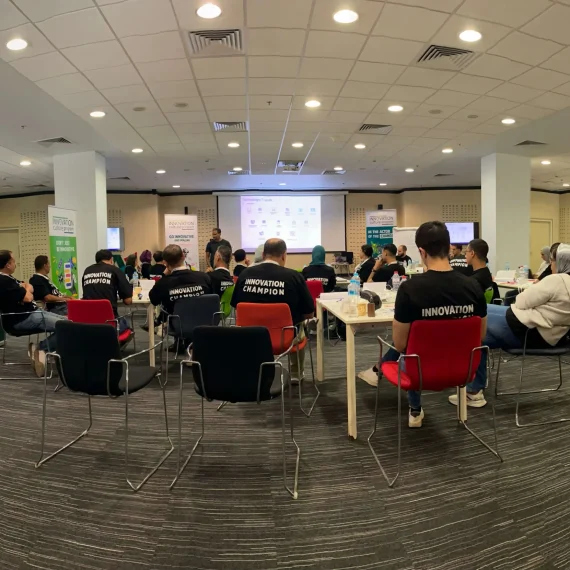
The process began with a nationwide market analysis of all youth centers in Egypt, paired with five in-depth field visits to pilot governorates (Aswan, Alexandria, Cairo, Menoufia, and Port Said).
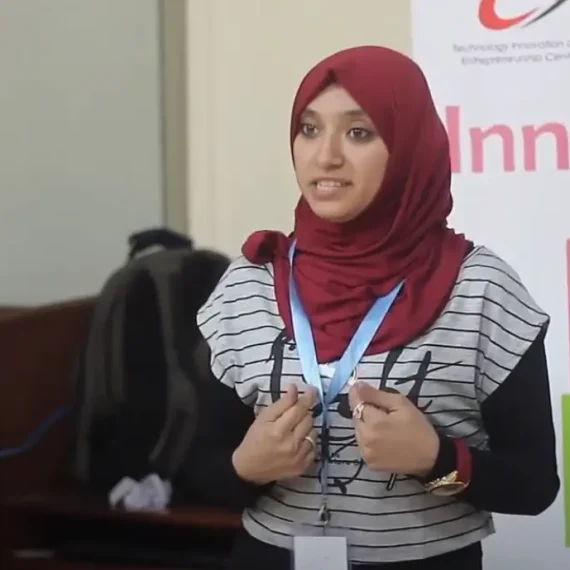
These visits included 10 focus group discussions with youth and management teams, engaging nearly 200 participants to capture on-the-ground insights.
This evidence base informed the development of a transformation model aligned with both national priorities and local realities.
Co-designing a universal model with local adaptation:
The team synthesized market and field insights into a universal business model anchored in four pillars: sustainability, quality of services, youth participation, and community engagement.
Alongside this, five tailored business models were designed to address the distinct socio-economic and cultural contexts of the pilot governorates.
From blueprint to operational reality:
Findings were consolidated into a national implementation roadmap, supported by a comprehensive operational manual detailing governance structure, staffing models, program design, quality assurance, and monitoring frameworks.
Integrated within this manual were a digital transformation strategy and a costed plan and sustainability framework, providing practical guidance for scaling the model to 1,000 centers by 2027 through diversified funding, partnerships, and revenue-generating services.
Designing for inclusion and accessibility:
The model embedded measures to ensure equitable access for women, girls, people with disabilities, migrants, and refugees — from physical accessibility upgrades to targeted program offerings — ensuring every community member can learn, connect, and thrive.

Transforming Egypt’s youth centers into inclusive community hubs required a tailored approach. Innovety delivered a robust market analysis, led 10 focus groups across 5 governorates, and developed contextualized business models with 30+ recommendations per center.
Their work — from an operational manual and costed roadmap to digital transformation and sustainability frameworks — created a clear pathway to scale this model to 1,000 centers by 2027. This ensures youth, women, and marginalized groups gain access to sustainable, vibrant community spaces nationwide.Tina